
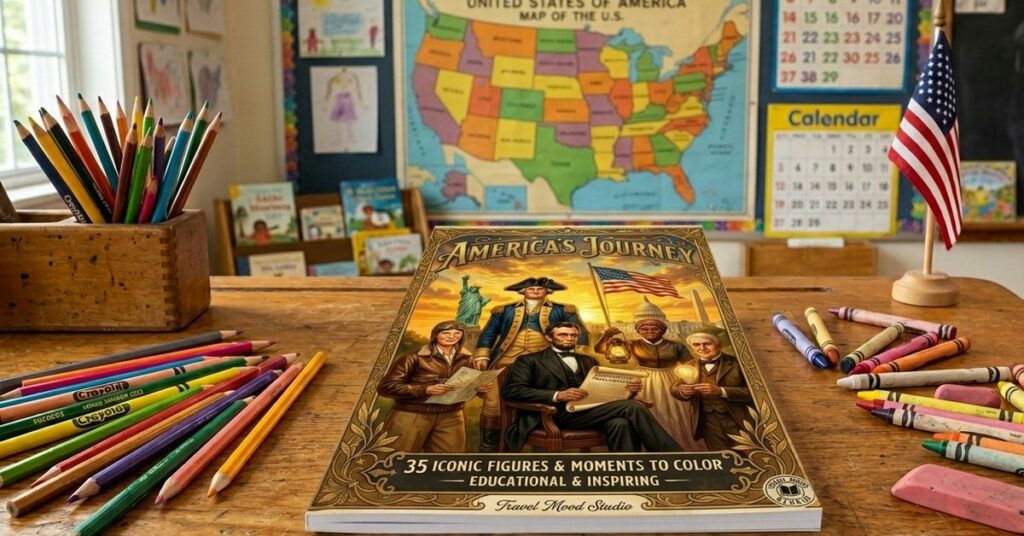
Finding history and geography coloring pages for grades 3–6 that are genuinely educational can be surprisingly difficult.
There is no shortage of free coloring pages online. A quick search brings up maps, famous landmarks, historical figures, flags, animals, and illustrations of places around the world. Many of them are attractive and perfectly suitable for a quiet art activity.
But if you’re a teacher or homeschooling parent looking for a resource that combines coloring with real learning, the question is different: Does the page actually teach something?
For children in grades 3 through 6, the best educational coloring pages can provide a simple way to explore history, geography, cultures, and important people while keeping the activity creative and screen-free.
Why History and Geography Matter in Grades 3–6
Grades 3–6 are an important period for developing a broader understanding of people, places, and the world beyond a child’s immediate surroundings.
History is no longer simply a collection of names and dates. Children can begin to explore the stories behind historical events and understand why particular people, places, and discoveries mattered.
Geography can also move beyond memorizing state capitals or locating countries on a map. Children can explore what makes a place unique, how people live there, and how physical and human characteristics interact.
This broader understanding is reflected in geography education resources from National Geographic, which describe geography as the study of places and the relationships between people and their environments. Its educator standards also emphasize the physical and human characteristics that give places their meaning.
That makes history and geography particularly well suited to visual learning activities.
What Makes a History or Geography Coloring Page Educational?
The difference between a decorative coloring page and an educational one is quite simple.
Does the page give the child something meaningful to learn?
A genuinely educational history or geography coloring page should combine an engaging illustration with accurate, age-appropriate information.
Instead of simply labeling an image “George Washington” or “Eiffel Tower,” the page might include a short explanation of who the person was, what the monument represents, or why the place is historically or geographically significant.
The information doesn’t need to be long. In fact, for a coloring activity, shorter is often better.
A few well-written sentences can introduce a child to a person, place, event, culture, invention, or historical period and provide a starting point for further discussion.
The goal is not to turn a coloring page into a textbook. It is to make the illustration part of the learning experience.
What to Look For in Educational Printables
Free resources can be extremely useful, but quality varies considerably.
Before printing a coloring page for your classroom or homeschool, ask a few simple questions.
Is there real educational content?
Look for pages that include factual information rather than just a title.
A page featuring a historical figure should tell the child something about that person. A page about a country should offer more than its name and flag. A monument should come with some context about its history, location, or purpose.
Is the information accurate?
This is particularly important when teaching history.
A visually attractive page can still contain an incorrect date, an oversimplified historical claim, or an inaccurate representation.
The Library of Congress offers extensive educational resources built around historical primary sources and emphasizes helping students ask questions, evaluate information, make inferences, and develop explanations about the past.
A coloring page is not a primary source, of course, but it can be a useful introduction to a historical topic that children later explore through books, photographs, documents, or museum resources.
Is the reading level appropriate?
A page designed for a third grader should not read like a high school textbook.
For grades 3–6, look for short paragraphs, clear vocabulary, and information that children can understand without extensive adult explanation.
The best pages leave children with one or two memorable ideas rather than overwhelming them with facts.
Does the illustration encourage observation?
A good educational illustration should give children something to look at.
Historical clothing, architecture, tools, landscapes, animals, maps, and cultural objects can all provide visual details that complement the accompanying text.
The child is not simply filling empty spaces with color. They are looking closely at the subject while learning about it.
History Coloring Pages for Grades 3–6
History offers endless possibilities for educational coloring activities.
Historical Figures
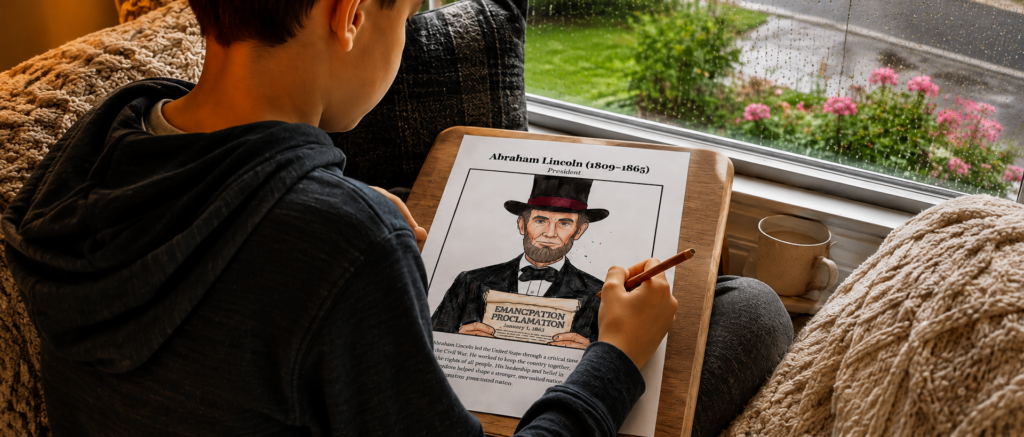
Biographical portraits are an especially accessible starting point.
A child can color a portrait of a historical figure while reading a short explanation of who they were and why they are remembered.
The Library of Congress provides classroom materials for elementary students that use historical documents, photographs, and objects to help children explore the past through individual stories and evidence.
A coloring page can work in a similar introductory way: present one person or topic, spark curiosity, and encourage the child to ask what happened next.
Historical Places and Monuments
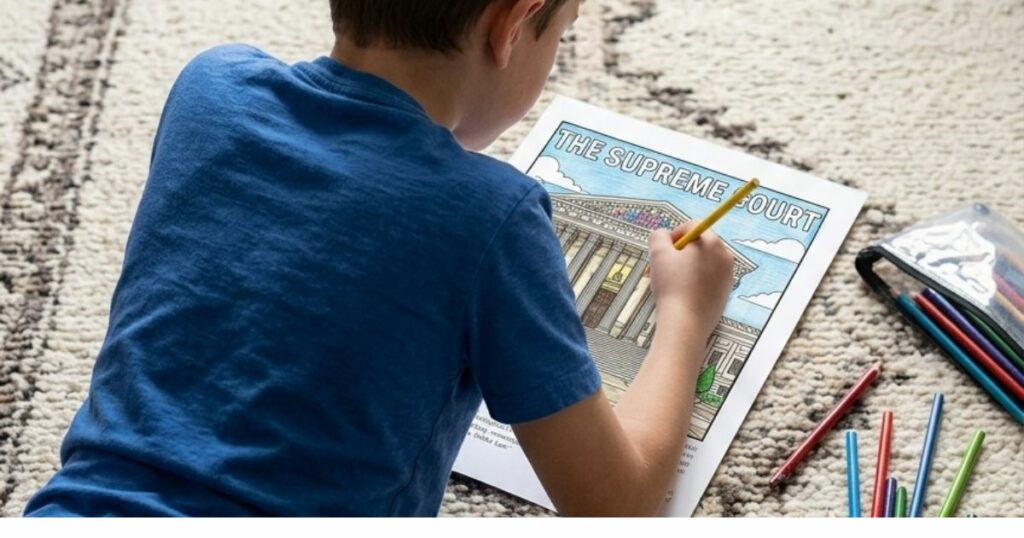
Famous buildings and monuments are another excellent way to connect history and geography.
A page about the Colosseum, Taj Mahal, Statue of Liberty, or Machu Picchu can introduce both where a place is and why it matters.
This creates a natural connection between the two subjects rather than treating history and geography as completely separate topics.
Civilizations and Historical Eras
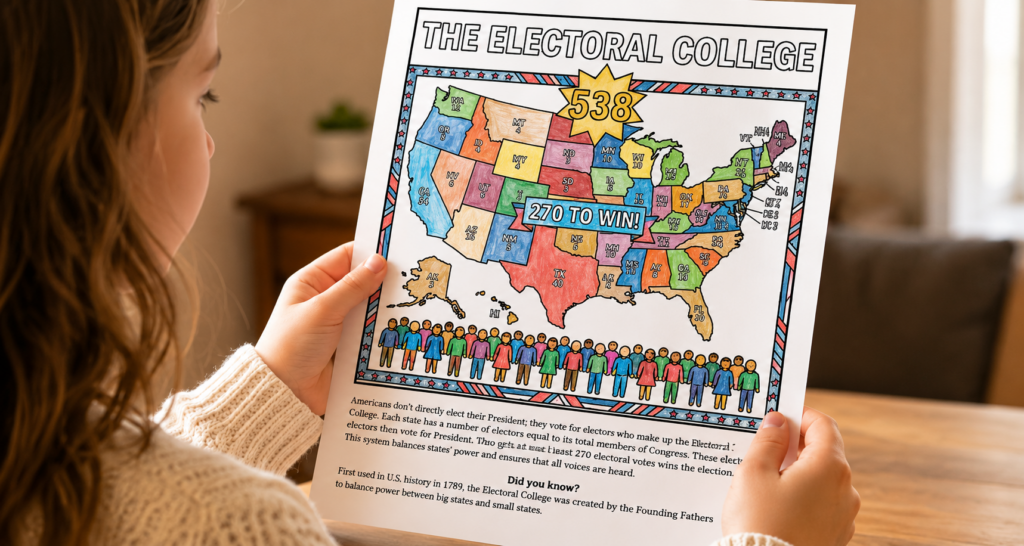
Ancient civilizations, exploration, major inventions, and important periods of American history can also be explored through carefully chosen illustrations.
The key is to avoid trying to explain an entire civilization on one page. A single person, object, building, or scene often provides a much more manageable starting point.
Geography Coloring Pages for Grades 3–6
Geography becomes much more interesting when children can connect places to the people who live there.
Countries and Cultures
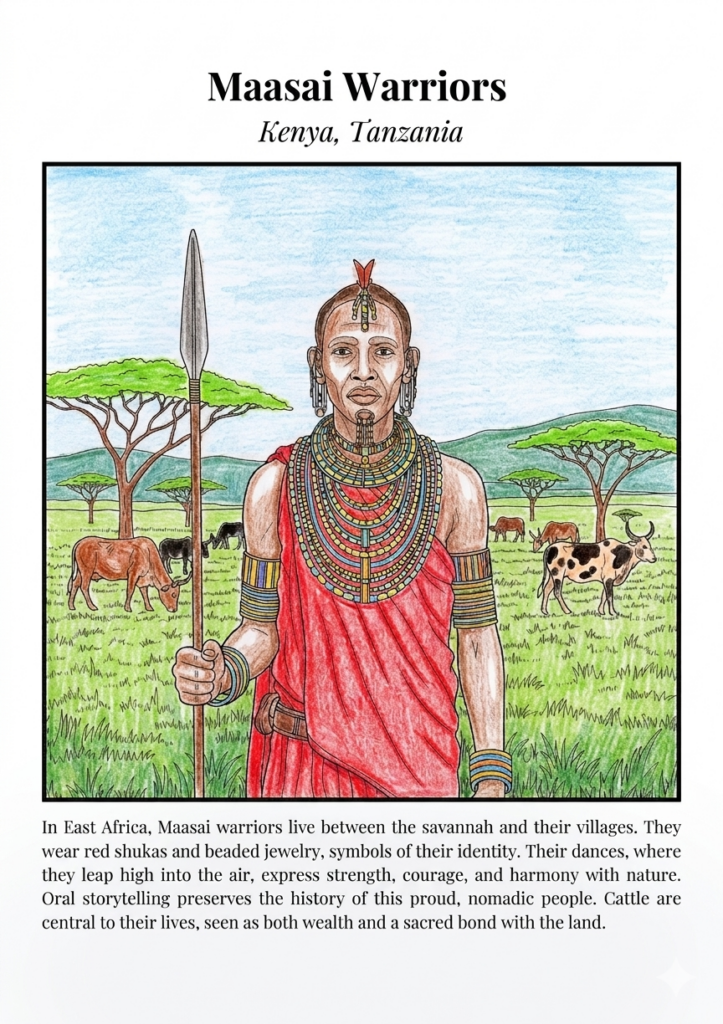
A geography coloring page might introduce a country’s landscape, traditional architecture, clothing, food, wildlife, or other cultural features.
National Geographic’s geography resources emphasize that places have both physical and human characteristics, and that understanding places can help students appreciate similarities and differences across communities and regions.
This is an important distinction.
Geography is not only about knowing where something is. It is also about understanding what that place is like and how people interact with it.
Landmarks and Famous Places
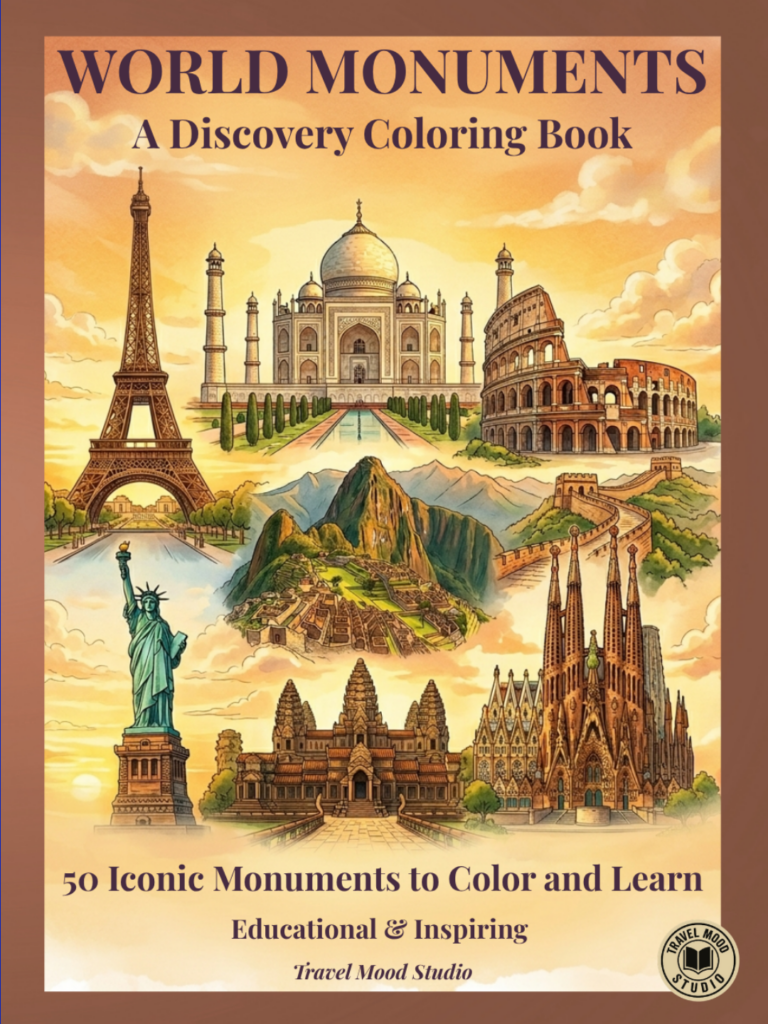
Landmarks make geography concrete.
Instead of memorizing a country’s location on a map, a child might first become interested in the Great Wall of China, the pyramids of Egypt, the Eiffel Tower, or a famous national park.
The landmark becomes a visual anchor for learning about the country, region, history, and culture surrounding it.
How to Use Coloring Pages in the Classroom or Homeschool
Educational coloring pages don’t need to be an entire lesson.
They can be used as a short activity before or after a larger unit.
For example:
Before a lesson: Use a coloring page to introduce a historical figure, country, or monument and ask children what they already know.
After a lesson: Use the page as a relaxed review activity.
During a unit: Create a collection of pages that children can keep in a history or geography notebook.
As independent work: Children can read the short text and complete the illustration while the teacher works with another group.
You can also use a finished page as a conversation starter. Ask your child or students to explain three things they learned, find the location on a map, or look for a related book in the library.
That small amount of follow-up can turn a simple coloring activity into a much richer learning experience.
Free History and Geography Coloring Pages to Try
If you’re not sure whether educational coloring pages will work for your students or your homeschool routine, starting with a free sample is a good idea.
Travel Mood Studio offers free sample pages from selected educational collections, including America’s Journey and World Monuments.
These samples let you see how the combination of detailed illustration and short educational text works before choosing a complete collection.
Educational Coloring Collections for Grades 3–6
For teachers and homeschooling families who want more than a collection of unrelated free printables, Travel Mood Studio creates complete educational coloring books around specific subjects.
America’s Journey introduces children to American history through 40 illustrated biographies and historical topics.
World Monuments combines geography, culture, architecture, and history through 50 famous places around the world.
Women of History and How America Works provide additional history and civics resources, while Peoples of the World offers a broader introduction to 50 cultures and places around the globe.
Together, these books can be used as supplementary resources alongside history and geography lessons, reading assignments, homeschool units, or independent activities.
Each collection contains 40 to 50 single-sided pages, combining a detailed illustration with educational text designed for children around grades 3–6.
The books are available in print on Amazon and as instant PDF downloads through Etsy and Teachers Pay Teachers.
The Bottom Line: Look for Learning, Not Just Coloring
A free printable can be a wonderful classroom resource, but the fact that something is labeled “educational” doesn’t automatically make it educational.
When choosing history and geography coloring pages for grades 3–6, look for three things: accurate information, age-appropriate text, and an illustration that genuinely supports the topic.
The best resources don’t ask children to choose between learning and creativity. They combine the two.
A few minutes spent coloring a historical figure, exploring a monument, or discovering a new country can become the beginning of a much larger conversation about history, geography, culture, and the world around us.
And sometimes, that is exactly what a good educational resource should do: make children curious enough to want to learn more.
Sources and Further Reading
- National Geographic Education – Geography, including the physical and human characteristics of places.
- Library of Congress – Teaching with Primary Sources and classroom resources for elementary students.