
Quick test: name a woman who co-discovered nuclear fission, the process behind both nuclear power and the atomic bomb. If Marie Curie came to mind, you’re thinking of a brilliant scientist, but not the one behind this particular discovery. That would be Lise Meitner, and there’s a good chance you’ve never heard her name, even though the physicist who did share the resulting Nobel Prize later admitted, in effect, that the recognition should have included her.
That gap, between what someone accomplished and how well remembered they are, is the whole subject of this article. These aren’t obscure footnotes. They’re women whose ideas, discoveries, and sheer nerve changed what came after them, and whose stories simply don’t get told as often as they should.
Lise Meitner: She Explained the Discovery. He Got the Nobel Prize.
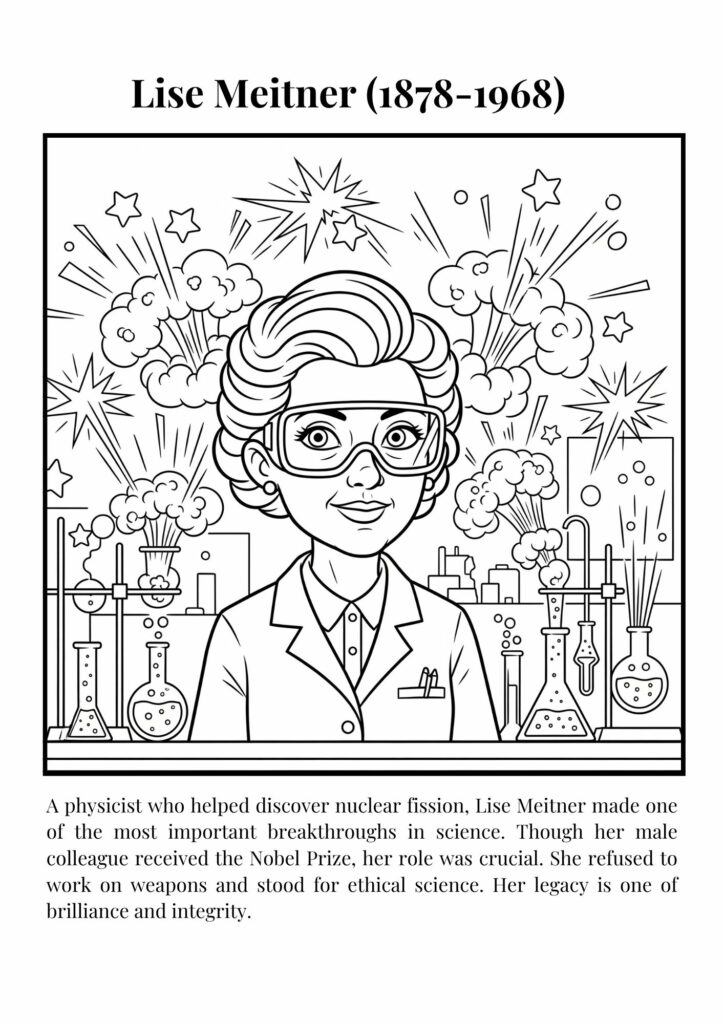
In December 1938, physicist Lise Meitner, working in exile in Sweden after fleeing Nazi Germany because she was Jewish, received a letter from her longtime research partner Otto Hahn describing a strange result: bombarding uranium with neutrons seemed to produce barium, a much lighter element. Hahn couldn’t explain how that was possible.
Meitner could. Working through the physics with her nephew, physicist Otto Frisch, she realized the uranium nucleus was actually splitting into two smaller nuclei, releasing enormous energy in the process. She and Frisch published the theoretical explanation in the journal Nature in early 1939 and gave the process its name: nuclear fission.
In 1944, the Nobel Prize in Chemistry for the discovery of nuclear fission went to Otto Hahn alone. Meitner, who had done the theoretical work explaining what Hahn had observed, was left out entirely. She was later invited to join the Manhattan Project in the United States and refused, reportedly saying she would have nothing to do with a bomb.
Did You Know? Element 109 on the periodic table, meitnerium, is named in Lise Meitner’s honor, a rare distinction for any scientist and one of very few elements named after a woman.
Sophie Germain: The Mathematician Who Had to Become “Monsieur Le Blanc”
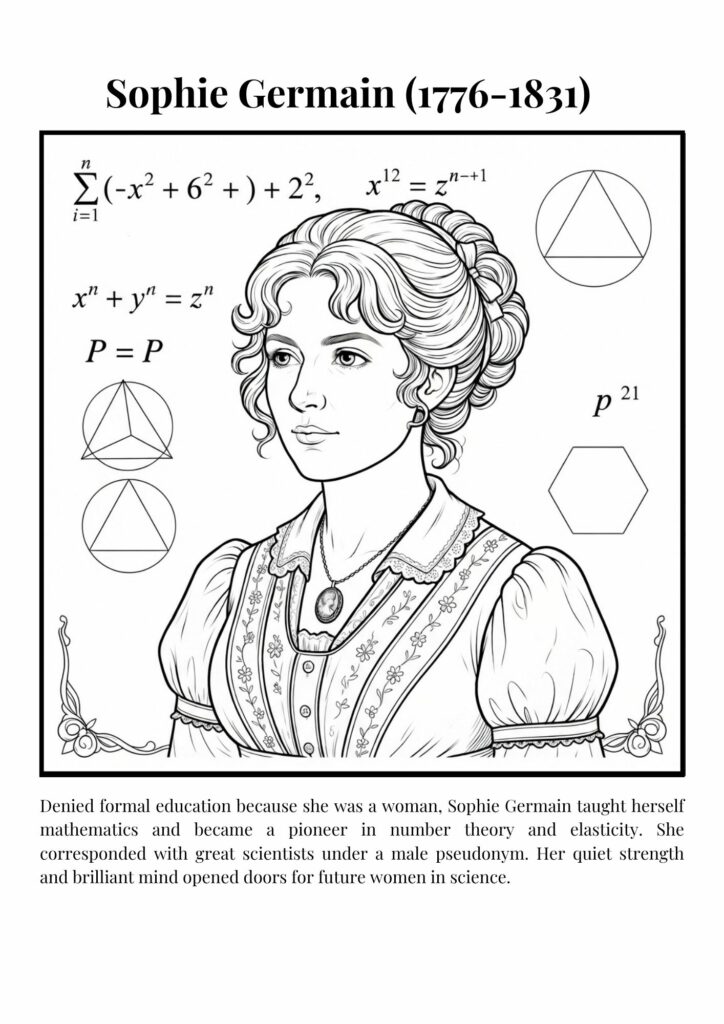
Sophie Germain taught herself mathematics as a teenager in Paris, over her parents’ objections, reportedly reading by candlelight after they took away her heat and light to stop her from studying at night. Women weren’t permitted to attend France’s École Polytechnique, so to get feedback on her work, Germain submitted it under the name of a former male student, Antoine-Auguste Le Blanc.
Her disguised work impressed the mathematician Joseph-Louis Lagrange enough that he asked to meet “Monsieur Le Blanc” in person, and was startled to find a young woman instead. Rather than dismissing her, Lagrange became a supporter of her work. Germain went on to correspond with Carl Friedrich Gauss, one of the most respected mathematicians in history, still using her pseudonym at first. Gauss only learned Germain’s true identity years later, when she intervened to protect his safety during a French military campaign, and he responded with even greater respect for her work.
Germain became the first woman to win a prize from the French Academy of Sciences, for research on why vibrating metal plates produce specific patterns, and she made major progress toward proving Fermat’s Last Theorem, a problem that had stumped mathematicians for over a century and wouldn’t be fully solved until 1994.
Mary Anning: The Fossil Hunter Whose Name Rarely Made It Into the Papers
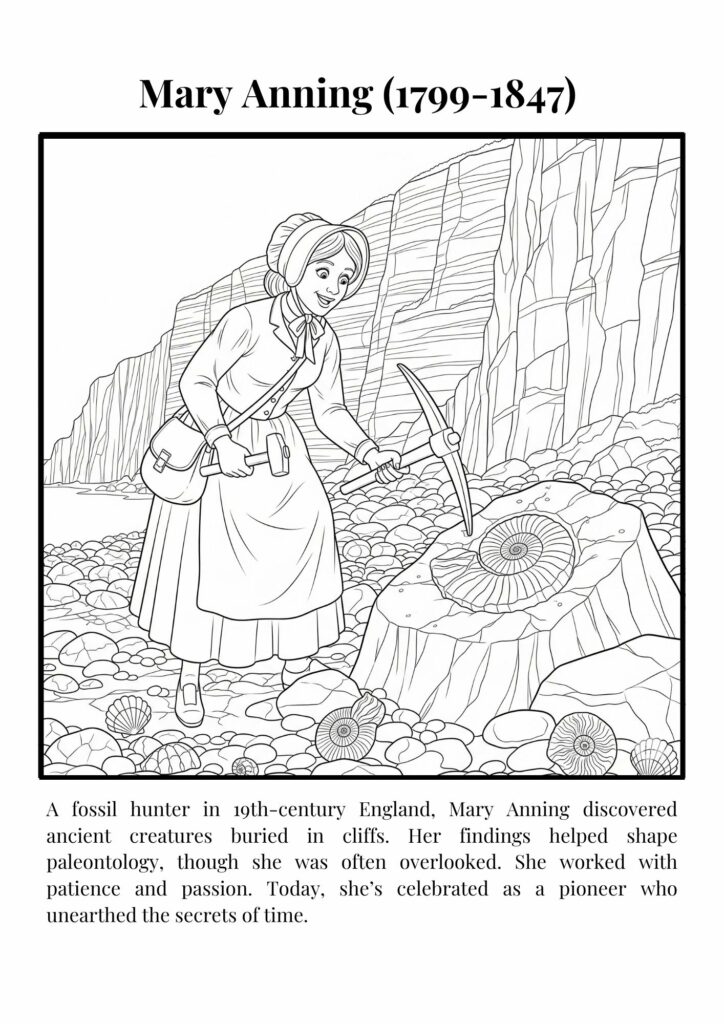
Mary Anning grew up poor in Lyme Regis, a seaside English town, where her father supplemented his income as a cabinetmaker by finding and selling fossils he found in the coastal cliffs. When Mary was eleven, her father died, and the family depended on the fossils she continued to find and sell.
Anning had almost no formal education, but she taught herself geology and anatomy well enough to become one of the most respected fossil experts of her era, according to the Natural History Museum in London. In 1823, she found the first nearly complete Plesiosaurus skeleton ever discovered, a marine reptile so unusual that the famous French naturalist Georges Cuvier initially suspected it was a fake, until other scientists confirmed the find was genuine.
Despite this, Anning’s name was frequently left out of the scientific papers describing the very fossils she had found and prepared. The male geologists she supplied and advised, including some of the era’s most prominent scientists, published under their own names while she remained largely uncredited during her lifetime.
Did You Know? Some historians believe Mary Anning may have inspired the well-known English tongue-twister “she sells seashells by the seashore,” a nod to how she supported her family by selling the fossils she found.
Alexandra David-Néel: The Woman Who Walked Into a Forbidden City
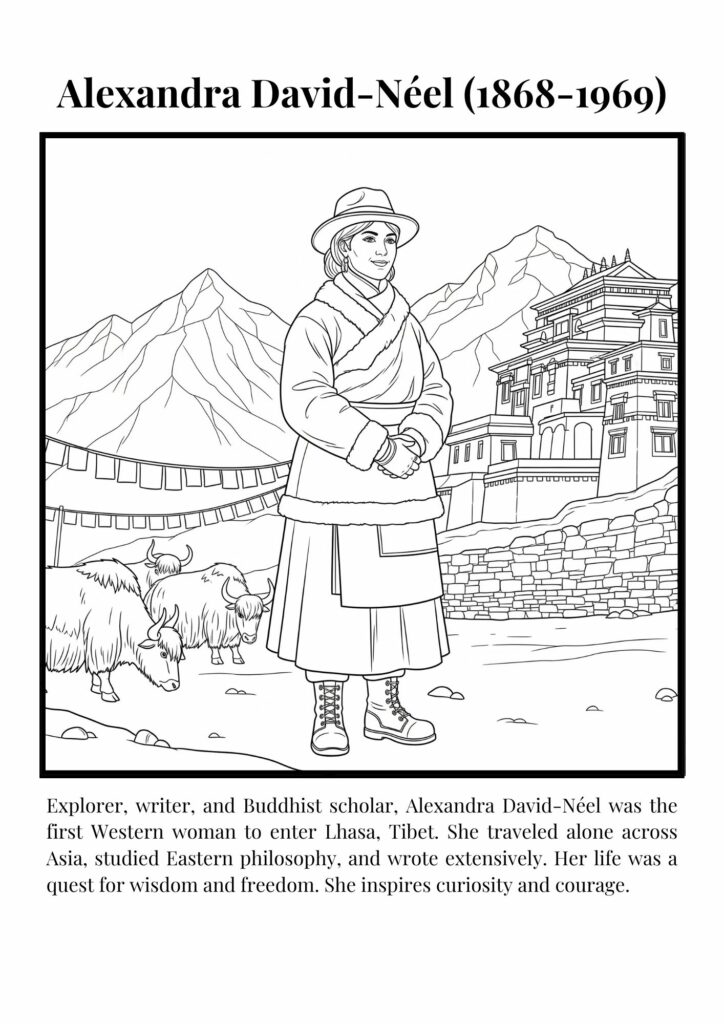
Alexandra David-Néel was a French opera singer turned scholar of Buddhism and Asian philosophy who spent fourteen years traveling through Asia, much of it on foot, studying religion and living for a time as a hermit in a cave in the Himalayas.
Her most famous journey came in 1924, when she was 55 years old. Tibet’s borders were closed to foreigners, and the holy city of Lhasa was strictly forbidden to outsiders. David-Néel disguised herself as a Tibetan pilgrim, darkening her skin and hair, and walked for weeks across Himalayan mountain passes with her adopted son, Yongden, to reach the city undetected. She is recognized as the first Western woman to enter Lhasa.
She spent two months in the city before leaving, and later wrote more than two dozen books about her travels and her studies of Tibetan Buddhism, work that went on to influence later generations of Western writers and thinkers interested in Eastern philosophy.
Wangari Maathai: The Scientist Who Turned Planting Trees Into a Movement

Wangari Maathai grew up in rural Kenya and became the first woman in East or Central Africa to earn a doctoral degree, in biology, and the first woman to become a professor in her home country, according to Britannica.
In 1977, working with Kenya’s National Council of Women, Maathai developed a simple idea: village women could fight deforestation, restore fuel sources, and improve their own communities by planting trees. That idea became the Green Belt Movement, which by the early 2000s had planted more than 30 million trees across Kenya and inspired similar organizations in other African countries.
Maathai’s activism went well beyond ecology. She was arrested, beaten, and threatened for opposing government-backed deforestation and corruption in Kenya, at real personal risk, and she consistently tied environmental protection to democracy and women’s rights. In 2004, she became the first Black African woman to win a Nobel Prize, awarded the Nobel Peace Prize for what the committee described as her contribution to sustainable development, democracy, and peace.
Why These Stories Get Lost
There’s a pattern across all five stories above: credit going to a male colleague or collaborator instead of the woman who did the foundational work (Meitner, Anning); a need to work around barriers built specifically to exclude women, whether disguising an identity or defying a closed border (Germain, David-Néel); and public, physical risk taken in pursuit of a cause bigger than personal recognition (Maathai).
None of this means these women were unusual in being overlooked. It means the standard version of history has, for a long time, been edited down to a smaller set of names than actually shaped it, and expanding it back out doesn’t require inventing anything, it just requires looking at the record that’s already there.
Bringing These Women Into Your Own History Curriculum
Introducing figures like these works especially well as a closing unit to an annual history sequence, once kids already have context for the fields and events these women were part of, physics and the history of science, exploration, or the history of civil rights and environmental movements. Our Women of History collection is built around exactly this idea: illustrated portraits paired with short, verified biographies of fifty women across different eras and fields, including Lise Meitner, Sophie Germain, Mary Anning, Alexandra David-Néel, and Wangari Maathai alongside better-known figures like Marie Curie and Rosa Parks, giving kids a visual anchor for names that don’t yet appear in most standard textbooks.
If you’re also covering ancient history, our article on [Who Was Cleopatra?] takes the same approach with a figure whose real story is often flattened into a much simpler legend than the historical record supports, a useful companion piece for showing kids that “getting the real story instead of the simplified one” applies across every era of history, not just to recent centuries.
A Concrete Activity to Try
Ask your child to pick one of the five women above and imagine they’re writing the one sentence that would go under her portrait in a museum. What’s the single fact that matters most? There’s rarely one obvious answer, since each of these women accomplished several things worth remembering, and that’s the point: it turns “women’s history” from a list of names to memorize into a real editorial decision kids can reason through, which tends to stick far longer than the names alone.
These Aren’t the Only Stories, But They’re a Real Start
Five women, five very different fields: nuclear physics, mathematics, paleontology, exploration, and environmental activism. None of them were minor players in the events they were part of. Once you notice the pattern, that credit tends to drift toward whoever already had it, it becomes easier to spot in every era of history you study afterward, which is arguably the most useful lesson a unit like this can teach.
Go Further
- Women of History : illustrated portraits and verified biographies of fifty women across history and fields, a strong fit for a closing unit on figures left out of standard textbooks.
- Pair with our article on [Who Was Cleopatra?] for a look at how legend and historical record diverge for one of history’s most famous women.
Sources
- Encyclopaedia Britannica, Lise Meitner biography
- U.S. Department of Energy, Lise Meitner and the Discovery of Fission
- Encyclopaedia Britannica, Sophie Germain: Biography, Education, Facts, & Death
- Natural History Museum, London, Mary Anning: The Unsung Hero of Fossil Discovery
- Encyclopaedia Britannica, Wangari Maathai: Biography, Nobel Peace Prize, Green Belt Movement
- Nobel Prize, Wangari Maathai — Facts
A note on sourcing: Alexandra David-Néel’s own travel accounts, written decades after her journey, are the primary source for some details of her time in Lhasa, alongside later biographical research; where historians note uncertainty about specific dates or details of her earlier border crossings into Tibet, this article sticks to the parts of her story that are well corroborated.